Choosing The Right AI Voice for Daily Communications

Finding the Right Tone: Choosing the Best AI Voice for Daily Communication

In non-emergency contexts, users value a voice that feels human, friendly, and engaging. This is especially true in education, healthcare, and commercial environments, where communication happens multiple times a day.


Why Everyday AI Voice Design Impacts User Engagement

Not all messages are created equal — and neither are the voices that deliver them.

  • Everyday voices support routine communication such as school announcements, workplace updates, or general assistance prompts, where tone and relatability matter more than urgency.
  • Emergency voices must cut through noise, stress the importance while remaining clear, authoritative, and calm.

Selecting the right AI voice means balancing intelligibility, tone, emotional impact, and listener trust based on both the message and the market it serves.

Male manager wearing a hard hat and holding a digital tablet, inspecting warehouse inventory with his team

Characteristics of an AI Voice for Daily Announcements

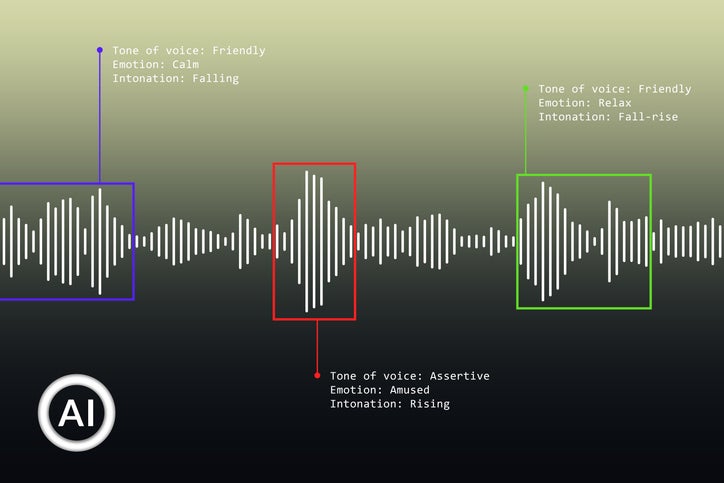
Valcom AI Voice for everyday communication public address
  • Approachability: Users respond better to voices that sound natural and welcoming. Studies by Nielsen Norman Group found that people prefer voice assistants that balance warmth and professionalism. (NNGroup, 2023)
  • Familiarity: Providing a choice of voices (gender, accent, or tone) can increase user satisfaction and reduce fatigue. (ScienceDirect, 2023)
  • Brand Consistency: For organizations, the everyday voice should align with brand identity — whether that’s calm and professional (healthcare) or upbeat and inviting (education).

Balancing Professionalism and Personality

  • Tone: Warm, conversational, friendly
  • Pacing: Natural conversational speed
  • Pitch: Neutral or slightly lower to convey ease
  • Accent: Regional or localized, depending on audience familiarity
  • Emotion: Positive, professional, and approachable

Example: “Good morning, students. Today’s announcements will begin in five minutes.” This voice style helps build familiarity and comfort — so that when an emergency message does occur, users recognize the system and respond instinctively.


Market-Specific Considerations

Different markets respond differently to voice characteristics. Here are examples of how tone and delivery may vary by environment:

MarketVoice ConsiderationExample
K-12Friendly, yet authoritative; clear diction, minimal slangTeachers and students respond best to familiar, calm tones that can transition seamlessly between daily & emergency use.
HealthcareProfessional, calm, empatheticClear annunciation and a soothing tone reduce stress among patients and staff.
Industrial/ManufacturingLoudness and clarity are top prioritiesVoices must penetrate noisy backgrounds; male or female voices with higher pitch and firm pacing perform best.
Government & TransportationFormal, neutral, multilingual supportVoice must convey authority and consistency across large, diverse populations.

Benefits of Personalization & Custom Voice Options

The decision isn’t just about choosing between a “male” or “female” voice — it’s about creating the right auditory experience for each context. A mismatched tone can lead to misunderstanding or even noncompliance in an emergency.

Choosing a voice design is a part of your overall communication strategy, not an afterthought. Considerations should include:

  • The environmental acoustics where messages play
  • User demographics and accessibility needs
  • Cultural and linguistic nuances
  • Integration with visual or text alerts

By treating AI voice selection as a safety and branding decision combined, organizations can create more effective communication systems across all scenarios.


Valcom Expertise in Voice-Driven Communications

Valcom’s integrated solutions — including IP paging, intercom, visual notification, and mass notification systems — support both emergency and everyday communication. With the growing role of AI in voice delivery, our focus remains the same: ensuring every message reaches every eye and ear, clearly and reliably.

Before selecting or deploying an AI voice for emergency use, consult your emergency management team and your Valcom representative. Together, we’ll help you find the balance between clarity, compliance, and connection.


Let Us Help

As you deliver routine updates or critical life-safety alerts, the right voice not only informs but also instills confidence. For emergency alerts, choose clear, authoritative calm. For daily communication, choose friendly, brand-aligned warmth.

Remember, AI voice selection should be a collaborative decision between your technology provider, safety team, and communication experts — because every voice speaks for your organization when it matters most.

Ready to leap? Contact Valcom today to find the right solution for your organization.

Choosing the Right AI Voice for Life Safety

WHY VOICE DESIGN MATTERS FOR LIFE SAFETY EMERGENCY COMMUNICATION

Valcom Life Safety AI Voice blog Busy Hospital Hallway Filled with Medical Experts in White Coats and Blue Uniforms. Middle Aged Female Doctor Reviewing a Patient's History on a Tablet Computer as She Heads to the Examination Room

When lives are on the line, the voice delivering your message matters. Choosing the right AI voice for emergency communication can dramatically improve how people react during a crisis. The tone, pitch, and pacing of an emergency message all influence whether instructions are heard, understood, and trusted. A well-selected AI voice can reduce confusion, calm panic, and ensure that safety procedures are heard clearly.

Emergency communication is not about sounding friendly—it’s about sounding clear, calm, and authoritative. Research shows that a steady, neutral tone increases comprehension and trust, especially in high-stress environments. Whether you’re deploying a mass notification system in a school, hospital, or industrial facility, your AI voice should deliver messages that command attention without causing alarm. In this post, we’ll explore how tone, pacing, and voice selection directly impact emergency response effectiveness—and why Valcom recommends consulting your emergency management team before selecting any AI-generated voice.


WHY THE RIGHT AI VOICE MATTERS IN EMERGENCY COMMUNICATIONS

Not all messages are created equal — and neither are the voices that deliver them.

  • Emergency voices must cut through noise, stress the importance while remaining clear, authoritative, and calm.
  • Everyday voices support routine communication such as school announcements, workplace updates, or general assistance prompts, where tone and relatability matter more than urgency.

Selecting the right AI voice means balancing intelligibility, tone, emotional impact, and listener trust based on both the message and the market it serves.

When seconds count, voice tone directly affects how people respond. In a crisis, users are often under duress — frightened, distracted, or in noisy environments — and clarity becomes paramount.


CHARACTERISTICS OF AN EFFECTIVE AI VOICE FOR EMERGENCY ALERTS

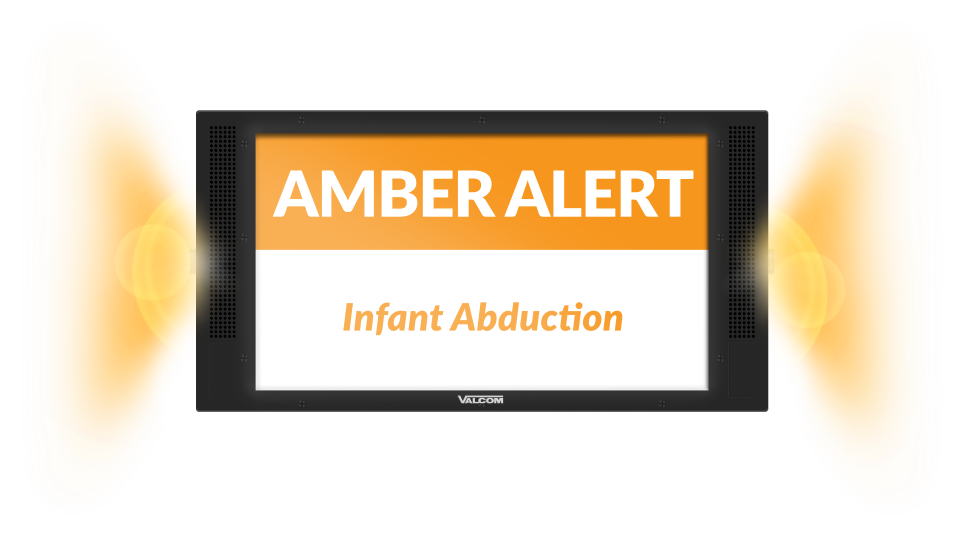
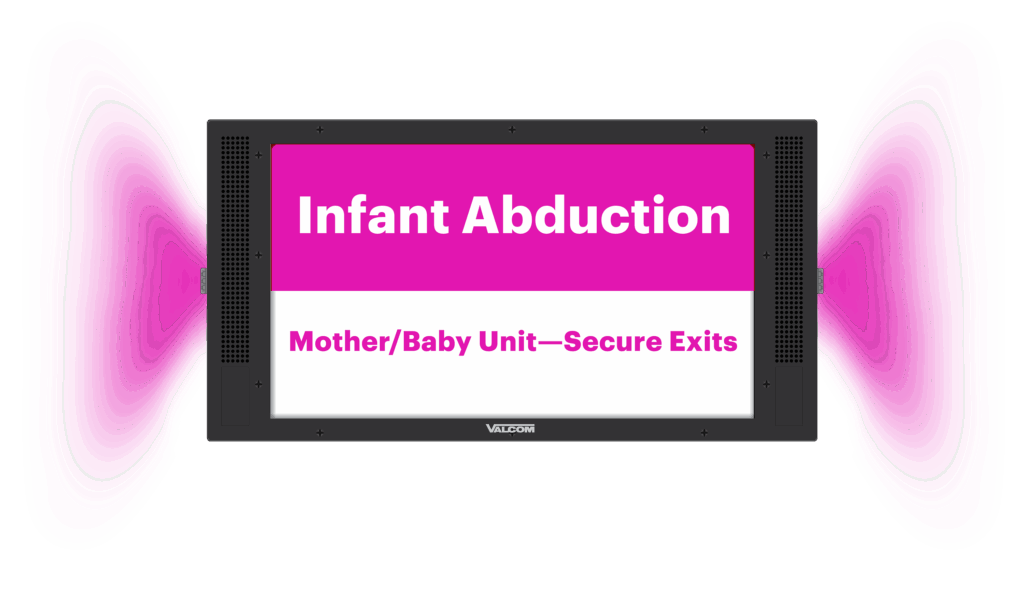
Valcom LCD DIsplay with Infant Abduction message
  • Intelligibility: Research from the U.S. Department of Energy emphasizes that voice intelligibility is the most critical component of an emergency communication system. (Energy.gov, 2015)
  • Tone and Delivery: Studies of 911 and dispatch communication show that a calm, confident tone promotes trust and compliance, whereas panicked or overly loud voices can escalate confusion. (Police Legal Sciences, 2023)
  • Authority and Trust: A 2024 study on AI voice perception found that authoritative, mature, and neutral-toned voices were rated most trustworthy by listeners. (arXiv, 2024)

HOW VOICE INTELLIGIBILITY IMPACTS RESPONSE TIMES

  • Tone: Firm, calm, authoritative
  • Pacing: Moderate speed, slightly slower than conversational
  • Pitch: Medium to slightly higher for clarity in noisy environments
  • Accent: Neutral or localized to audience for better comprehension
  • Emotion: Neutral or reassuring — never dramatic or robotic

An example line might sound like:
“Attention. Please proceed to the nearest exit. Do not use the elevators.”
The goal is command through calm, ensuring comprehension and compliance without inducing fear.

Sound360° Flat Panel Speaker

THE IMPORTANCE OF CONSULTING YOUR EMERGENCY TEAM BEFORE SELECTING AN AI VOICE

Before implementing an AI-generated voice for any life-safety emergency communication system, Valcom strongly recommends consulting your internal safety and emergency response teams, as well as local authorities having jurisdiction (AHJ).
Every organization’s environment is unique — acoustics, demographics, stress factors, and even cultural expectations can influence how messages are received. Working collaboratively with emergency management professionals ensures your AI voice:

  • Meets voice intelligibility standards
  • Aligns with local emergency response procedures
  • Is tested for clarity in real-world scenarios
  • Supports accessibility for hearing-impaired or multilingual populations

Valcom can assist integrators and end users in evaluating how AI voices integrate with emergency notification systems (ENSs), IP speakers, and multi-channel alerting solutions.


VALCOM’S EXPERTISE IN VOICE-DRIVEN COMMUNICATION

Valcom’s integrated solutions — including IP paging, intercom, visual notification, and mass notification systems — support both emergency and everyday communication. With the growing role of AI in voice delivery, our focus remains the same: ensuring every message reaches every eye and ear, clearly and reliably.
Our team works with safety officers, IT directors, and facilities teams to evaluate AI voice options that align with your emergency protocols, compliance standards, and communication goals.
Before selecting or deploying an AI voice for emergency use, consult with your emergency management team and your Valcom representative. Together, we’ll help you find the balance between clarity, compliance, and connection.


FINAL TAKEAWAY

Valcom’s integrated solutions — including IP paging, intercom, visual notification, and mass notification systems — support both emergency and everyday communication. With the growing role of AI in voice delivery, our focus remains the same: ensuring every message reaches every eye and ear, clearly and reliably.

Our team works with safety officers, IT directors, and facilities teams to evaluate AI voice options that align with your emergency protocols, compliance standards, and communication goals.

Before selecting or deploying an AI voice for emergency use, consult with your emergency management team and your Valcom representative. Together, we’ll help you find the balance between clarity, compliance, and connection.

Ready to learn how Valcom can help with your life-safety emergency communications? Contact us today.

The Power of Integration

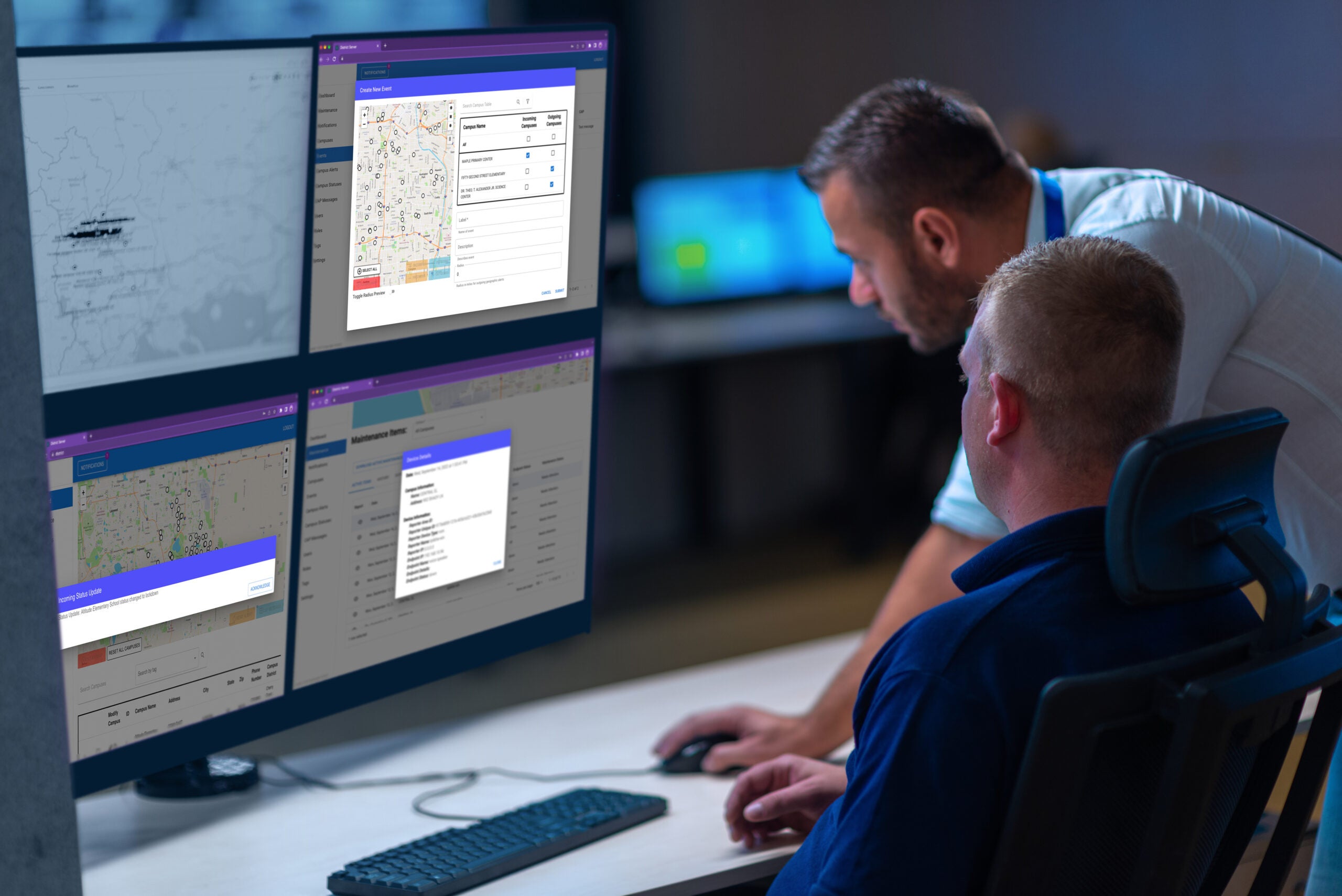
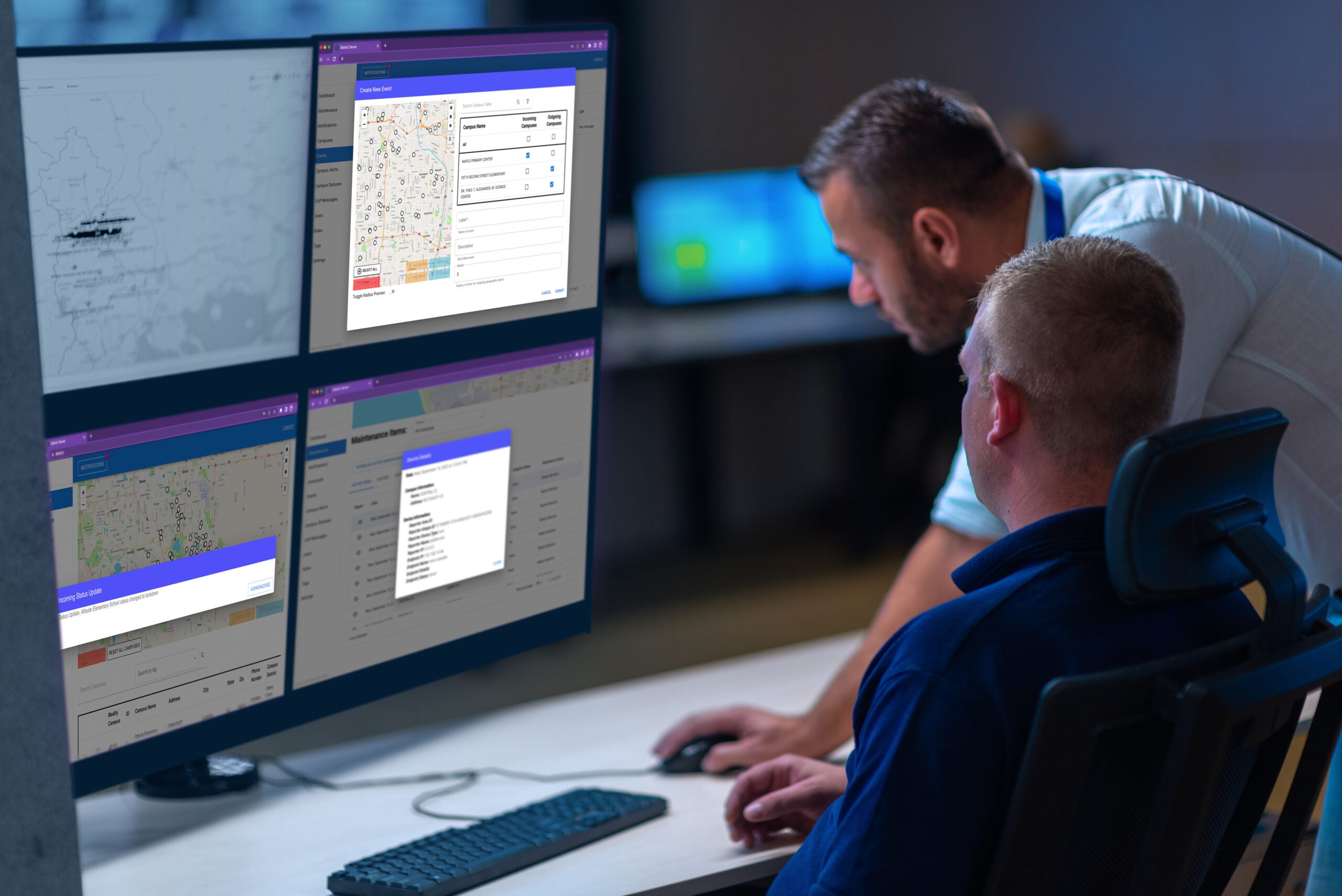
two men sitting in front of 4 computer monitors with the Vemass user interface on the screen

In today’s connected world, the speed and accuracy of emergency communication can make all the difference. Valcom’s integrated life safety communication systems bring together access control, fire panels, nurse call systems, and mass notification platforms into a single seamless network—ensuring that critical alerts reach the right people at the right time on every channel.


Many organizations—from school districts and hospitals to manufacturing facilities—rely on a mix of standalone safety systems. Each may function well independently, but the lack of integration between them can delay response times, create confusion, and compromise safety. When seconds matter, these silos can make the difference between an organized response and chaos. A unified communication platform is no longer optional—it’s essential.

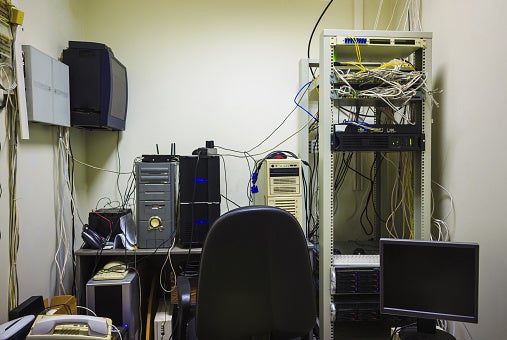
Valcom Power of Integration.The workplace of the system administrator. A small, messy room with a table with a lot of monitors and a network server

Laptop with VEMASS software installed show geofencing

Valcom bridges these gaps through advanced emergency communication integration, connecting systems across industries and facilities, including:

  • Access Control Systems – Instantly trigger lockdowns or perimeter alerts in K-12 schools and corporate campuses when a security breach occurs.
  • Camera Systems – Integrate with surveillance and analytics platforms to provide real-time visual context during events. Security personnel can receive synchronized alerts with live video feeds to verify incidents and respond faster.
  • Nurse Call Systems – Route priority alerts directly to staff in hospitals or senior living centers, improving coordination and response times.
  • Mass Notification Software – Fully InformaCast and Intrado Revolution compatible and supportive of Common Alerts Protocol (CAP) Alerts, Valcom platforms extend messages across PA, VoIP, mobile, and desktop endpoints for complete unified notification coverage.

This interoperability ensures that every subsystem—regardless of manufacturer—communicates seamlessly within one safety network.


Valcom’s flexibility lies in how it connects. Our systems use open APIs, contact closures, network relays, and GPIO interfaces to integrate directly with third-party technologies. Whether triggering an emergency lockdown from an access control panel, syncing a camera system to automated audio and visual messaging, or pushing notifications through mass alert software, Valcom provides real-time data exchange and command synchronization. This level of connectivity enables customization and scalability without complex middleware—ideal for IT and facility teams managing multi-site operations.

Light blue cirlcle with white lines depicting a contact closure relay
Light blue cloud image with "API" in middle with blue network connectors flowing from the bottom
Light Blue circle with CAP and an exclamation point with wave showing transmission

Unlike systems that sit idle until disaster strikes, Valcom platforms support daily operational communication as naturally as they handle emergencies. Schools use them for morning announcements and bell schedules; hospitals use them for patient calls and shift changes; factories use them for paging and routine safety reminders. Because staff and students interact with the system every day, familiarity builds muscle memory—making it second nature to use during a crisis. When urgent communication is needed, users already know how to act, what to expect, and how to respond.

Valcom power of intergration in a hospital setting with Filled with Medical Experts in White Coats and Blue Uniforms. Middle Aged Female Doctor Reviewing a Patient's History on a Tablet Computer as She Heads to the Examination Room

Valcom power of integration image of a male industrial working with a two-way radio reviewing computer monitors.

A unified system simplifies control, enhances awareness, and increases confidence across all environments:

  • Faster response through automated triggers and synchronized alerts
  • Reduced risk of human error with centralized management
  • Scalable design that grows with the organization
  • Better compliance with safety and security standards

The result is a cohesive safety ecosystem where K-12 campuses, healthcare networks, industrial complexes, and enterprise organizations can communicate quickly.

Valcom can integrate with various third-party software and hardware providers. To review this list, click the “Integration Solutions” button below.


Valcom’s approach to enterprise safety integration extends beyond compatibility—it’s about sustainability and evolution. Designed to adapt to emerging technologies, our systems provide organizations with a reliable, future-ready foundation for both everyday communication and critical alerts. Whether you’re modernizing a single facility or managing communication across an entire district or enterprise, Valcom delivers a single, connected, intelligent platform. Learn More about our Valcom Enterprise Maintenance and Security Solution by clicking below.

Valcom Power of Integration. Colloage of healthcare hospital with three medical workers walking donw the hall, middle image is middle school aged children walking down the school hallway and an african amercian female industrial worker smiling.

When seconds matter, trust the power of integration. Valcom’s unified life safety communication systems deliver clarity, speed, and reliability for every moment—routine or critical—because alerts and familiarity with the systems save lives. Read more about how Valcom’s life safety solutions help organizations keep people safe and informed.


Contact Us Form

This field is for validation purposes and should be left unchanged.
This field is hidden when viewing the form

Next Steps: Sync an Email Add-On

To get the most out of your form, we suggest that you sync this form with an email add-on. To learn more about your email add-on options, visit the following page (https://www.gravityforms.com/the-8-best-email-plugins-for-wordpress-in-2020/). Important: Delete this tip before you publish the form.

About You

Your Name(Required)
Your Address(Required)
Your Email Address(Required)

How Can We Reach You?

We would love to chat with you. How can we get in touch?

What's on your mind?

Please let us know what's on your mind. Have a question for us? Ask away.

Cut Through the Noise

In environments filled with constant motion and background noise — like manufacturing plants, warehouses, airports, and hospitals — clear communication can be the difference between calm and chaos. When every second matters, a single missed alert can compromise safety and response times. That’s why industrial facilities are choosing to incorporate visual and audio emergency notification systems. This approach ensures messages, especially those during emergencies, reach every eye and every ear.


Industrial paging in noisy environments. Image of an industrial worker wearing hearing protection in an industral plant

Traditional audio alerts often struggle to cut through the sound of machinery, background music, or ambient noise. In these high-decibel settings, relying solely on audio isn’t enough. Many industries, such as manufacturing, require employees to use hearing protection while at work. At the same time, visual cues alone may be missed by employees or visitors who aren’t facing the right direction. Therefore, the most effective strategy is a multi-modal communication approach — combining both sound and visuals to deliver messages with impact and clarity.


Bright LED displays, strobes, and multicolor flashers serve as visual reinforcements for emergency and routine messaging.

Valcom’s new LCD Display and multi-color flasher elevate visual communication to a new level. LCDs can present scrolling text, custom messages, and even real-time data. Meanwhile, multi-color flashers instantly distinguish the nature of an alert. For example, red for evacuation, blue for lockdown, and amber for weather warnings.

These technologies not only reach those who may not hear an alarm — such as individuals wearing hearing protection or with hearing impairments — but also add clarity and precision to every notification.

Valcom VIP-LD22 Series LCD Dispaly with text

While visual alerts enhance clarity, audio remains the fastest way to capture attention and convey detailed instructions.

With Valcom’s network-based paging and life safety solutions, messages can be broadcast instantly to targeted zones or to the entire facility. Pre-recorded and live announcements ensure flexibility — whether it’s a severe weather alert, evacuation, or routine operational update.

Integrating with overhead speakers, horns, and wide coverage speakers like the Sound360° ensures audio clarity across vast, open spaces without dead zones or echo distortion.


When audio and visual systems operate as part of a unified platform — such as Valcom’s enterprise communication solutions — the result is a synchronized, reliable, and scalable notification network.

Integration with third-party systems, such as access control, fire panels, and third-party software providers, ensures that all alerts trigger simultaneously across all channels. The result: faster awareness and response times. Furthermore, it ensures compliance with industry safety standards such as ADA.


Every ear and every eye matters. By pairing visual and audio alerts, organizations can communicate effectively with everyone. This includes employees wearing hearing protection, patients resting in quiet zones, or travelers moving through a busy terminal.

The outcome isn’t just compliance or convenience — it’s life safety when it matters and ensures no one is left uninformed when seconds count. To learn more about how Valcom’s overhead paging and visual notifications fit into your market, click the market icon below.

K-12 icon
heart icon
gear icon for industrial market
globe icon for Valcom Goverment market
Valcom Corporate Market Icon

Fill out the form below and let’s discuss our solutions.

Contact Us Form

This field is for validation purposes and should be left unchanged.
This field is hidden when viewing the form

Next Steps: Sync an Email Add-On

To get the most out of your form, we suggest that you sync this form with an email add-on. To learn more about your email add-on options, visit the following page (https://www.gravityforms.com/the-8-best-email-plugins-for-wordpress-in-2020/). Important: Delete this tip before you publish the form.

About You

Your Name(Required)
Your Address(Required)
Your Email Address(Required)

How Can We Reach You?

We would love to chat with you. How can we get in touch?

What's on your mind?

Please let us know what's on your mind. Have a question for us? Ask away.

Valcom Life Safety Solutions

Populations change. Messages stay clear.

Life safety is nothing new. It has been around for years. In fact, K-12 schools have long recognized the importance of structured communication – especially during emergencies. During the Cold War and the Cuban Missile Crisis era, schools conducted “Duck and Cover!” drills. In the 1980s, the phrase “Stop! Drop! And Roll!” was taught to Generation X. Today, school-aged children are part of what the media refers to as the “lockdown generation.” While emergency scenarios have evolved over the years, the protocol for many K-12 schools remains unchanged: perform drills and keep the language simple and easy to understand to ensure the safety of your population.

But what about organizations that don’t have a consistent population? Hospitals, airports, and business campuses face unique challenges as people come and go throughout the day, and many of them are unfamiliar with the facility.


Preparedness and Real-Time Situational Awareness

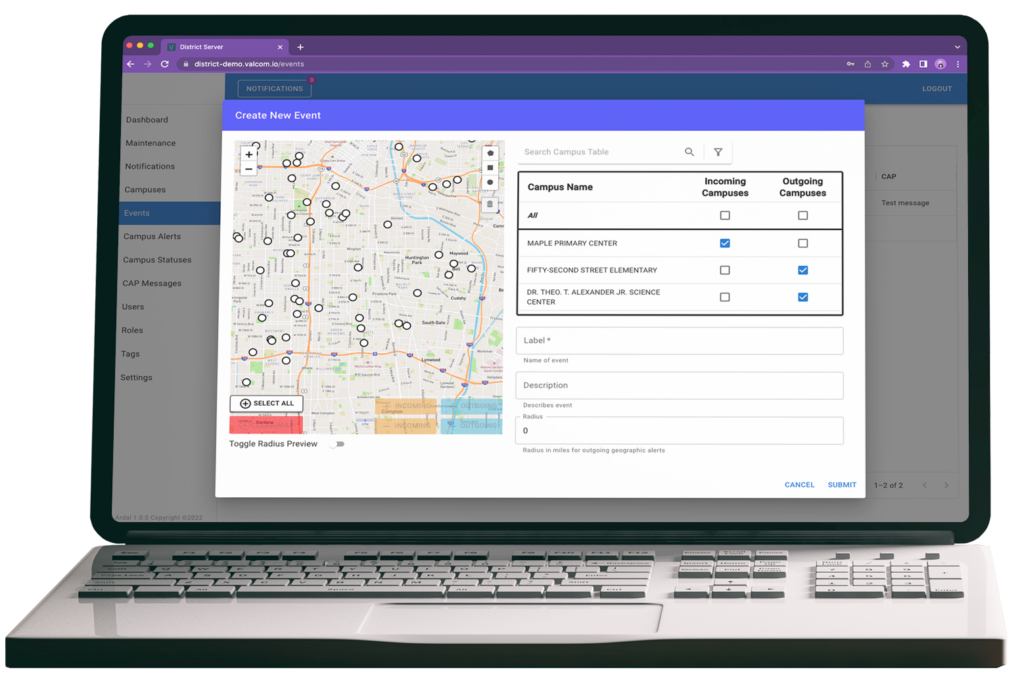
Unlike schools that follow standardized drills, facilities with transient populations, such as hospitals, require messaging that adapts to the situation. Instead of using “Code Pink” for an infant abduction, a plain-language alert — “Infant abduction, mother/baby floor, secure exits” — is more effective at getting the population’s attention and helping them become aware of their surroundings. Valcom systems allow administrators to create real-time, location-specific instructions that are broadcast out to overhead paging speakers, LED/LCD message boards, and IP HelpPoints. This agility transforms emergency communications and helps organizations to move from reactive to proactive in emergencies.


Integration with Existing Systems

Valcom’s flexibility makes it easy to integrate with existing systems, including door access systems, camera systems, and software-based platforms. When these systems are all connected, an organization has a unified platform that instantly alerts people across multiple channels and methods – Valcom systems help you reach every eye and ear. But what about when there is an emergency in one area of the building that doesn’t affect other parts of the building? It is simple: Valcom’s system allows administrators to issue messages to one area of the building while maintaining operations in another. Scalability is key for many organizations, such as hospitals, airports, and corporate, commercial, and industrial campuses that span multiple buildings.

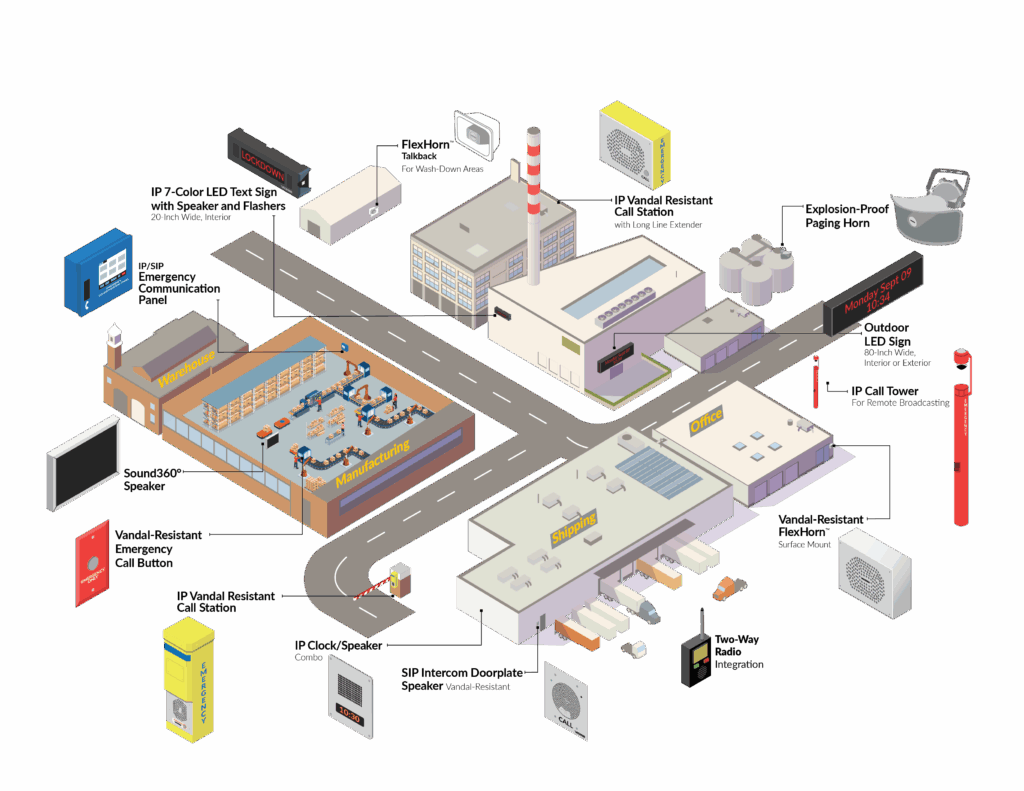
Industrial complex layout with Valcom speakers, signs and other endpoints

Security men reviewing information on camera

Everyday Communication Built-In

While Valcom systems excel during emergencies, their primary function is day-to-day communications. Paging staff, shift change alerts, visitor notifications, and routine announcements all flow through the same network. The dual use of a Valcom system means end users are already familiar with the interface, so when an emergency does happen, they already know the system and what to do next.


To learn about how we work in healthcare, K-12 and the commercial & industrial markets click the images below.

Healthcare

heart icon

Commercial & Industrial

gear icon

K-12

Want to learn more how Valcom can assist your organization with Life Safety Solutions. Complete the form below to let us know what your challenges are.


Contact Us Form

This field is for validation purposes and should be left unchanged.
This field is hidden when viewing the form

Next Steps: Sync an Email Add-On

To get the most out of your form, we suggest that you sync this form with an email add-on. To learn more about your email add-on options, visit the following page (https://www.gravityforms.com/the-8-best-email-plugins-for-wordpress-in-2020/). Important: Delete this tip before you publish the form.

About You

Your Name(Required)
Your Address(Required)
Your Email Address(Required)

How Can We Reach You?

We would love to chat with you. How can we get in touch?

What's on your mind?

Please let us know what's on your mind. Have a question for us? Ask away.

Hello Plain Language Protocol

Why Hospitals Are Moving to Plain Language Protocols and How Valcom Delivers It

If you’ve worked in a hospital or even visited one, you’ve probably heard color codes over the public address paging system — “Code Blue,” “Code Red,” “Code Silver.” Helpful? Sometimes. Consistent? Not really. Across the U.S., recommendations from hospital associations and federal emergency associations advocate for replacing color codes with plain-language protocol alerts that everyone—clinicians, staff, patients, and visitors—can immediately understand. Here’s what’s driving the shift and how Valcom helps hospitals eliminate codes and deliver plain language protocols through its communication solutions, making implementation easy.


Why the shift to plain language?

Nurse station at a hospital

Clarity under stress. Federal emergency management encourages the use of plain language to facilitate quick coordination among responders from different organizations. The National Incident Management System (NIMS) defines plain language as avoiding codes and jargon—especially when multiple agencies are involved. While NIMS mandates plain language for mutual-aid scenarios, it strongly encourages its use for day-to-day operations, as it reduces confusion and speeds action. Not every hospital or agency, such as law enforcement, uses a standardized code language. For example, a “Code Silver” in one hospital may mean a missing elderly patient, but in another hospital, it could mean an active shooter threat. Coded language can lead to miscommunication and a delay in response time.

Safety and Standardization

Many hospital associations nationwide have concluded that color codes vary too widely between facilities, which can cause confusion and slow response—particularly for float staff, travelers, and new hires. Several hospital associations from states such as Iowa, Missouri, Texas, New Jersey, and Colorado, among others, promote the adoption of standardized, plain-language (e.g., “Active Shooter—First Floor—Shelter in Place”) to improve transparency and reduce errors. It’s essential to consult with your state’s hospital association to determine if plain language protocol is mandatory or voluntary in your state.
Bottom line: Plain language clearly states what’s happening and where, so people can take action.


So, What Does Plain Language Sound Like?

Many toolkits recommend consistent, descriptive phrasing that names the hazard, location, and action.

For example:

  • “Infant Abduction – Mother/Baby Unit – Secure Exits”
  • “Active Shooter- ED Lobby – Run, Hide, Fight”

How Does Valcom Help Hospitals?

Pair Audio with Visual Notification for Inclusive Communication

  • Valcom Speakers & Horns (ceiling, wall, and clean room speakers as well as vandal-resistant horns) deliver crisp voice paging emergency communication across many areas across a hospital, including patient and visitor areas, lobby, cafeterias, and others.
  • The VIP-LC22 Series is an LCD display with speakers and flashers, equipped with customizable templates that display hazard, location, and action in an easy-to-read format.

Launch the Right Alert Announcements with Valcom’s Site Manager

  • Valcom’s Site Manager delivers tailored solutions to address the diverse needs of healthcare facilities. Valcom helps healthcare delivers plain language protocol by tailoring its products for your specific needs.

Monitor, Manage and Prove Readiness

  • Valcom’s VEMASS solution provides a real-time status of all IP endpoints and software components across multiple locations—ensuring your alerting system is healthy before you need it.

What About Code Blue?

What about those scenarios where a Code Blue is in use? Many states still allow a few legacy color codes while transitioning to plain language equivalents. Valcom recommends that you check your state association’s guidance and align your scripts accordingly. Additionally, understanding how Valcom helps healthcare deliver plain language protocol will ensure accurate and rapid response during such critical events.

Ready to Modernize Your Healthcare Communications?

Valcom helps healthcare systems transition from color codes to clear, plain language protocols without disrupting existing communication infrastructure. Our solutions include paging servers, IP speakers, visual signage, mobile activation, and enterprise monitoring. Please reach out to us to learn more about how Valcom helps healthcare facilities deliver clear, concise protocols effectively and efficiently to meet the specific needs of your facility.

Contact Us Form

This field is for validation purposes and should be left unchanged.
This field is hidden when viewing the form

Next Steps: Sync an Email Add-On

To get the most out of your form, we suggest that you sync this form with an email add-on. To learn more about your email add-on options, visit the following page (https://www.gravityforms.com/the-8-best-email-plugins-for-wordpress-in-2020/). Important: Delete this tip before you publish the form.

About You

Your Name(Required)
Your Address(Required)
Your Email Address(Required)

How Can We Reach You?

We would love to chat with you. How can we get in touch?

What's on your mind?

Please let us know what's on your mind. Have a question for us? Ask away.

The ezIP Hybrid Paging System

Upgrade Without the Overhaul: Benefits of a Hybrid Paging System

When it comes to upgrading your paging system, ripping out everything and starting over isn’t always practical. Many organizations still rely on analog paging systems for daily operations and emergency alerts, but also want to move toward more flexible, IP-based communication. That’s where Valcom’s ezIP hybrid paging system shines. Designed to help organizations transition from analog to IP paging at their own pace, ezIP bridges the gap between legacy infrastructure and modern network-based solutions, without sacrificing reliability, coverage, or clarity.

What is a Hybrid Paging System

A hybrid paging system combines traditional analog paging equipment, such as 25V/70V speakers and wiring, with IP-based paging endpoints. Valcom’s ezIP solution allows healthcare facilities, industrial facilities, and smaller organizations to preserve existing infrastructure while adding IP speakers and advanced communication features on the same network.
Whether you’re managing emergency notifications in healthcare or facility-wide announcements in manufacturing, ezIP helps you modernize while staying cost-effective.


Top Benefits of Valcom’s ezIP Hybrid Paging System

Analog Compatibility Saves Time & Money

One of the biggest concerns with VoIP paging upgrades is cost. ezIP is compatible with analog speakers, even those from other manufacturers, so there’s no need to replace your entire system. You can keep what works and upgrade only where needed. This dramatically reduces labor and infrastructure costs.

Flexible & Scalable Paging

With ezIP, you can add IP speakers and expand coverage as your organization grows. New zones, buildings, or areas can be added without running new analog cabling. The system scales easily across campuses, multi-floor facilities, and networked locations.

VoIP & SIP Phone System Integration

Many organizations are moving to VoIP phone systems. ezIP integrates with SIP-based systems, ensuring your paging system works seamlessly with your IP phones and VoIP infrastructure, thereby helping to unify communication across platforms.

Future-Proof with Software Upgradability

ezIP’s IP endpoints are software-upgradable, allowing you to unlock features like two-way talkback, shift tones, and compatibility with third-party mass notification platforms as your needs evolve.


If you’re looking to modernize your paging and emergency communication systems without a complete infrastructure overhaul, then a hybrid paging system with Valcom’s ezIP is your answer. It’s cost-effective, scalable, easy to manage, and designed for real-world compatibility.
Make your next paging upgrade smarter, not harder. With Valcom ezIP, you can future-proof your communications and meet today’s demands with confidence.

Modernizing Analog Phone Systems: The Path to IP

Are you still relying on a traditional phone system? You’re not alone. Many organizations, especially those in healthcare or manufacturing, still use legacy phone systems. However, as these systems age, more IT and facility leaders are being asked to explore IP-based phone systems.

Since Alexander Graham Bell first invented the telephone in 1876, the analog phone system was the dominant communication technology. Since the mid-20th century, businesses and institutions began implementing an analog PBX (Private Branch Exchange) system for internal call routing, which remained until digital and IP-based systems began to gain traction in the 1990s and early 2000s. While analog phone systems are simple, secure, and stable, they still present challenges for an organization. These challenges include limited features, rising maintenance costs, obsolescence management concerns, and limited ability to broadcast messages across an organization. Organizations that are considering making the jump from analog to digital often find it overwhelming. When organizations move from analog to a VoIP phone system, they often discover that their existing paging system is no longer compatible. Valcom’s ezIP Product Line addresses smaller organizations’ concerns when transitioning from analog to IP. One of the standout advantages of Valcom’s ezIP solution is its phone-agnostic design. ezIP is engineered to integrate seamlessly with virtually any existing analog or paging infrastructure, regardless of phone type or 3rd-party device.


Whether your facility uses analog telephones, legacy PBX systems, third-party paging speakers, or a mix of all three, ezIP acts as a bridge, not a barrier, to modernization. This flexibility enables organizations to:

  • Preserve existing investments in phones and endpoints
  • Avoid vendor lock-in or unnecessary device replacement
  • Migrate gradually to IP at your own pace

ezIP doesn’t force you to conform to a single vendor ecosystem. Instead, it adapts to your environment, allowing you to modernize at your own pace while supporting interoperability across manufacturers.  Valcom’s ezIP acts as a bridge, not a leap, from analog to IP. It’s designed to lower risk, preserve investments, and offer flexibility while future-proofing communications infrastructure.

Budgeting for Life Safety

The Risks of Value Investing in Life Safety Budget

Every organization looks for ways to save money and maximize efficiency in budgeting. The concept of “value investing”—aiming to find the most cost-effective solutions—works effectively in many areas. However, when applied to life safety budgets, this approach can pose significant risks that outweigh any initial savings.

The True Cost of Cutting Corners

Life safety systems are designed to protect people and property in emergencies. These systems—such as emergency notification, mass communication, access control, and security infrastructure—must function flawlessly when lives are at stake. Yet, too often, decisions are made based on the upfront costs rather than long-term reliability and effectiveness that can save lives when seconds count.

What Are the Pitfalls of Low-Cost Solutions?

Low-cost solutions may be budget-friendly, but many lack the durability, range, and functionality required for sending emergency notifications to multiple people in multiple locations. For instance, a mass notification system with poor audio clarity or limited coverage can fail to communicate critical instructions during an emergency. When budgeting for life safety, many organizations consider their current security infrastructure. Many low-cost options do not integrate well with existing security infrastructure, leading to communication gaps and operational inefficiencies. A fragmented system increases response times and reduces the effectiveness of emergency protocols. While an initial investment in a lower-cost system may seem like a win, frequent breakdowns, costly repairs, and premature replacements often erase savings. Reliable, high-quality systems provide longevity and reduce overall costs in the long run. In life-threatening situations, every second counts. A system that lags, experiences outages, or fails to send notifications promptly can lead to devastating consequences, including loss of life.

Investing in Safety: A Non-Negotiable Priority

Life safety budgets should be built on reliability, compliance, and future-proofing. When evaluating solutions, organizations should consider:

  • Proven Performance: Choose vendors with a track record of success in emergency communications and security solutions.
  • Scalability: Ensure the system can grow and adapt to organizational needs.
  • Interoperability: Verify the solution integrates with existing emergencies and security infrastructure.
  • Compliance Assurance: Work with experts who understand regulatory requirements and best practices.
  • Technical Support: We may be biased but our technical support team is one of the best in the industry. Their knowledge and expertise of our products and solutions ensures quick assistance – helping you maximize performance and resolve issues with confidence.

Valcom’s Life Safety Solution

Valcom offers a comprehensive range of life safety solutions designed to meet the unique needs of various sectors, including education, healthcare, commercial and industrial, and government facilities. Our solution portfolio consists of

  • Emergency Notification Systems: Integrated platforms that deliver timely alerts and critical information during emergencies.
  • Paging and Intercom Systems: Advanced systems facilitating clear and efficient communication across facilities.
  • Visual Alerting Solutions: Devices that provide visual cues to ensure messages reach all individuals, including those with hearing impairments.
  • Integration Solutions: Valcom has multiple paths to integrate with an organization’s security infrastructure.

A notable example of Valcom’s commitment to life safety is our partnership with The “I Love U Guys” Foundation to enhance K-12 school safety. This collaboration integrates Valcom’s cutting-edge software and hardware solutions with Standard Response Protocol, creating a unified platform tailored to the specific security needs of K-12 educational institutions. Valcom’s life safety solution is designed for versatility and can be configured to meet the needs of any market. Whether it’s healthcare, commercial and industrial, transportation, or higher education, it adapts to ensure safety throughout your organization.

Valcom’s solutions are designed to integrate seamlessly with existing infrastructures, offering flexibility and scalability. Their systems are engineered and assembled in-house, ensuring high-quality standards and the ability to adapt to specific customer requirements.

The goal of any life safety system is to provide peace of mind, ensuring that when the unthinkable happens, the right technology is in place to protect lives. Value investing may work in other areas of an organization’s budget, but safety, reliability, and effectiveness should always supersede short-term cost savings. Cutting corners on life safety budgets can have irreversible consequences—making it one area where investing wisely is genuinely a matter of life and death. To learn how about Valcom’s market solutions check out Who We Help or contact us directly.

Integration, Efficiency and Safety for Healthcare

Valcom’s Integrated Healthcare Solutions

January 13, 2025

Clear and timely communication in healthcare is vital for patients to receive critical care when needed. Not only is the speed of care important for patients in life-threatening situations, but it can improve staff efficiency, reduce confusion, and increase patient satisfaction. Hospitals rely on multiple systems to address patient communication and safety needs effectively.

Nurse Call Systems for Enhanced Patient Care

Nurse call systems are communication networks that connect patients with nursing staff in healthcare facilities, nursing homes, and long-term care facilities. These systems allow patients to request assistance and help staff effectively coordinate their efforts and resources. These systems are crucial for improving patient safety and satisfaction by ensuring timely assistance and effective communication between patients and healthcare providers. Hospitals may also use pagers, email, SMS text messages, or overhead paging systems to streamline communication further.

Advancements in Overhead Paging and Emergency Notification Systems

Overhead paging technology for hospitals and other medical care facilities has evolved significantly. From basic analog public address systems providing one-way paging to current IP-based systems operating over hospital networks, these advancements offer scalability and reliability for a more integrated solution to enhance communication and patient safety. Emergency notification systems have become essential in healthcare facilities, enabling personnel to broadcast critical alerts to staff, patients, and visitors during emergencies.


Valcom’s Healthcare Communication Solutions

Hospitals aiming to strengthen emergency communication and safety have industry best practices solutions to help the flow. Valcom offers innovative solutions for healthcare facilities and provides enhanced communication capabilities that reduce human error and improve emergency response times. Below are highlights of how Valcom systems improve communication in healthcare:

  • Integration with Nurse Call Systems: Valcom seamlessly integrates with nurse call systems to ensure faster, more effective patient communication. By bridging nurse call and other communication devices, Valcom enhances response times and reduces the potential for miscommunication.
  • Emergency Notification with Plain Language Protocols: Valcom solutions support plain language protocols for emergency notifications. These protocols ensure that messages are clear, understandable, and timely, reducing confusion and allowing staff and patients to respond effectively to emergencies.
  • Reducing Human Error in Critical Situations: Valcom systems are designed to automate and streamline critical communication processes, minimizing human error during emergencies. By integrating seamlessly with public paging systems, digital signage, mobile alerts, and other systems, Valcom ensures that vital messages reach the right people at the right time. A centralized control hub empowers hospital administrators to manage communication consistently and efficiently, reducing delays and confusion. Pre-programmed emergency messages and automated responses enhance reliability, allowing staff to focus on patient care rather than troubleshooting communication breakdowns. Hospitals can trust that critical information is delivered swiftly and accurately, safeguarding lives when seconds count.
  • Rapid Communication Across Departments: Valcom systems enable real-time updates to be broadcast across departments, ensuring staff remain informed and connected during routine operations and emergencies.

Valcom’s healthcare communication systems are designed to comply with stringent regulations, including OSHA, ADA, and HIPAA, ensuring patient confidentiality and accessibility. Whether for routine announcements or rapid emergency responses, Valcom’s integrated solutions enhance communication, improve patient safety, and foster a more efficient healthcare environment.