WHY VOICE DESIGN MATTERS FOR LIFE SAFETY EMERGENCY COMMUNICATION

When lives are on the line, the voice delivering your message matters. Choosing the right AI voice for emergency communication can dramatically improve how people react during a crisis. The tone, pitch, and pacing of an emergency message all influence whether instructions are heard, understood, and trusted. A well-selected AI voice can reduce confusion, calm panic, and ensure that safety procedures are heard clearly.
Emergency communication is not about sounding friendly—it’s about sounding clear, calm, and authoritative. Research shows that a steady, neutral tone increases comprehension and trust, especially in high-stress environments. Whether you’re deploying a mass notification system in a school, hospital, or industrial facility, your AI voice should deliver messages that command attention without causing alarm. In this post, we’ll explore how tone, pacing, and voice selection directly impact emergency response effectiveness—and why Valcom recommends consulting your emergency management team before selecting any AI-generated voice.
WHY THE RIGHT AI VOICE MATTERS IN EMERGENCY COMMUNICATIONS
Not all messages are created equal — and neither are the voices that deliver them.
- Emergency voices must cut through noise, stress the importance while remaining clear, authoritative, and calm.
- Everyday voices support routine communication such as school announcements, workplace updates, or general assistance prompts, where tone and relatability matter more than urgency.
Selecting the right AI voice means balancing intelligibility, tone, emotional impact, and listener trust based on both the message and the market it serves.
When seconds count, voice tone directly affects how people respond. In a crisis, users are often under duress — frightened, distracted, or in noisy environments — and clarity becomes paramount.

CHARACTERISTICS OF AN EFFECTIVE AI VOICE FOR EMERGENCY ALERTS
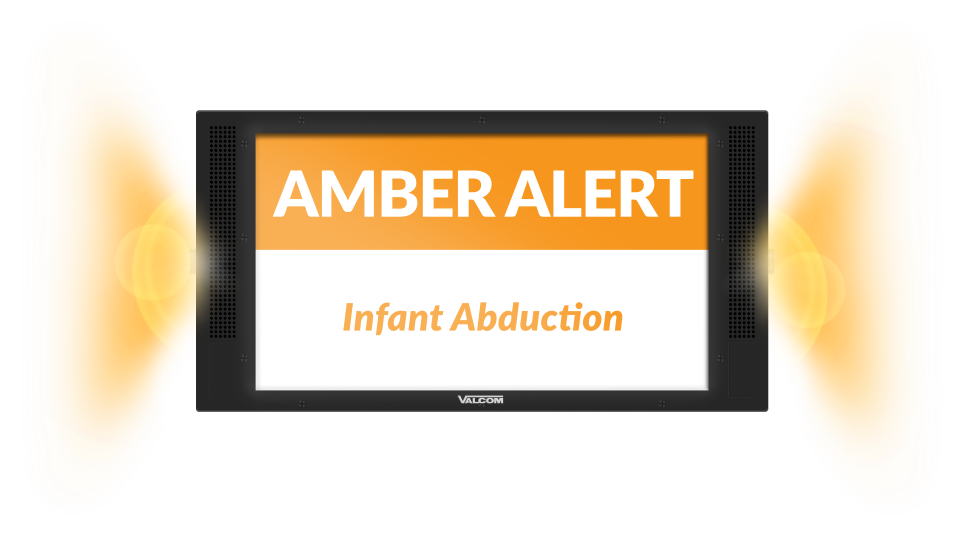
- Intelligibility: Research from the U.S. Department of Energy emphasizes that voice intelligibility is the most critical component of an emergency communication system. (Energy.gov, 2015)
- Tone and Delivery: Studies of 911 and dispatch communication show that a calm, confident tone promotes trust and compliance, whereas panicked or overly loud voices can escalate confusion. (Police Legal Sciences, 2023)
- Authority and Trust: A 2024 study on AI voice perception found that authoritative, mature, and neutral-toned voices were rated most trustworthy by listeners. (arXiv, 2024)
HOW VOICE INTELLIGIBILITY IMPACTS RESPONSE TIMES
- Tone: Firm, calm, authoritative
- Pacing: Moderate speed, slightly slower than conversational
- Pitch: Medium to slightly higher for clarity in noisy environments
- Accent: Neutral or localized to audience for better comprehension
- Emotion: Neutral or reassuring — never dramatic or robotic
An example line might sound like:
“Attention. Please proceed to the nearest exit. Do not use the elevators.”
The goal is command through calm, ensuring comprehension and compliance without inducing fear.

THE IMPORTANCE OF CONSULTING YOUR EMERGENCY TEAM BEFORE SELECTING AN AI VOICE
Before implementing an AI-generated voice for any life-safety emergency communication system, Valcom strongly recommends consulting your internal safety and emergency response teams, as well as local authorities having jurisdiction (AHJ).
Every organization’s environment is unique — acoustics, demographics, stress factors, and even cultural expectations can influence how messages are received. Working collaboratively with emergency management professionals ensures your AI voice:
- Meets voice intelligibility standards
- Aligns with local emergency response procedures
- Is tested for clarity in real-world scenarios
- Supports accessibility for hearing-impaired or multilingual populations
Valcom can assist integrators and end users in evaluating how AI voices integrate with emergency notification systems (ENSs), IP speakers, and multi-channel alerting solutions.
VALCOM’S EXPERTISE IN VOICE-DRIVEN COMMUNICATION

Valcom’s integrated solutions — including IP paging, intercom, visual notification, and mass notification systems — support both emergency and everyday communication. With the growing role of AI in voice delivery, our focus remains the same: ensuring every message reaches every eye and ear, clearly and reliably.
Our team works with safety officers, IT directors, and facilities teams to evaluate AI voice options that align with your emergency protocols, compliance standards, and communication goals.
Before selecting or deploying an AI voice for emergency use, consult with your emergency management team and your Valcom representative. Together, we’ll help you find the balance between clarity, compliance, and connection.
FINAL TAKEAWAY
Valcom’s integrated solutions — including IP paging, intercom, visual notification, and mass notification systems — support both emergency and everyday communication. With the growing role of AI in voice delivery, our focus remains the same: ensuring every message reaches every eye and ear, clearly and reliably.
Our team works with safety officers, IT directors, and facilities teams to evaluate AI voice options that align with your emergency protocols, compliance standards, and communication goals.
Before selecting or deploying an AI voice for emergency use, consult with your emergency management team and your Valcom representative. Together, we’ll help you find the balance between clarity, compliance, and connection.
Ready to learn how Valcom can help with your life-safety emergency communications? Contact us today.