Populations change. Messages stay clear.
Life safety is nothing new. It has been around for years. In fact, K-12 schools have long recognized the importance of structured communication – especially during emergencies. During the Cold War and the Cuban Missile Crisis era, schools conducted “Duck and Cover!” drills. In the 1980s, the phrase “Stop! Drop! And Roll!” was taught to Generation X. Today, school-aged children are part of what the media refers to as the “lockdown generation.” While emergency scenarios have evolved over the years, the protocol for many K-12 schools remains unchanged: perform drills and keep the language simple and easy to understand to ensure the safety of your population.
But what about organizations that don’t have a consistent population? Hospitals, airports, and business campuses face unique challenges as people come and go throughout the day, and many of them are unfamiliar with the facility.

Preparedness and Real-Time Situational Awareness
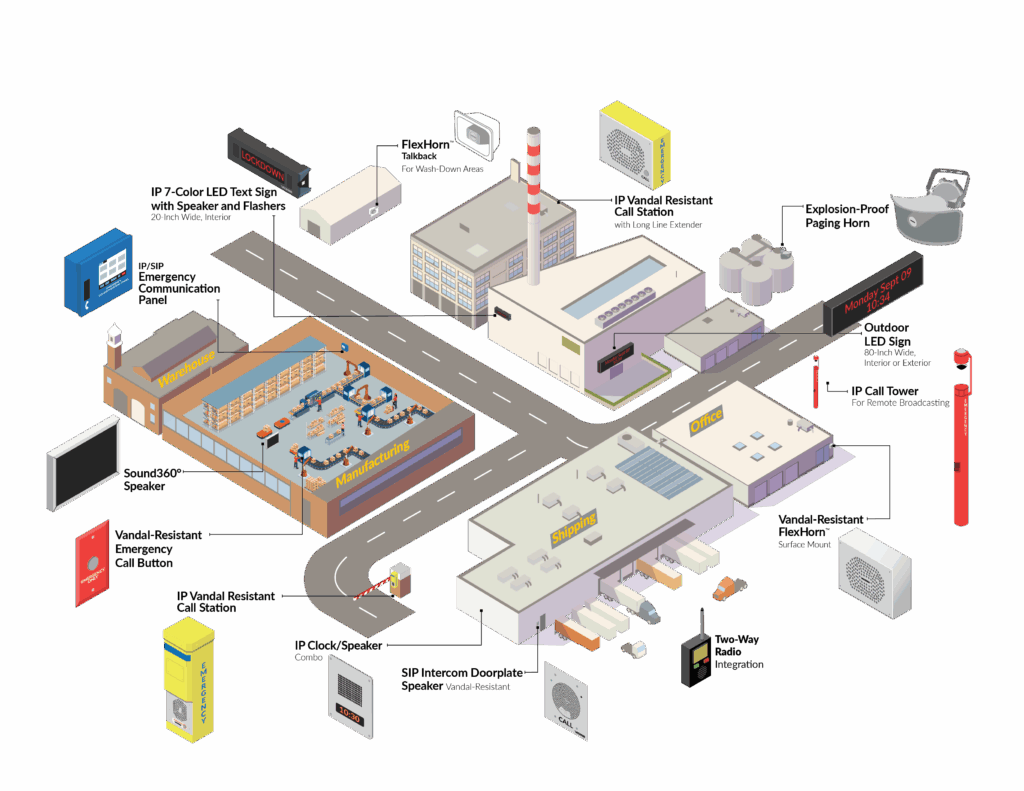
Unlike schools that follow standardized drills, facilities with transient populations, such as hospitals, require messaging that adapts to the situation. Instead of using “Code Pink” for an infant abduction, a plain-language alert — “Infant abduction, mother/baby floor, secure exits” — is more effective at getting the population’s attention and helping them become aware of their surroundings. Valcom systems allow administrators to create real-time, location-specific instructions that are broadcast out to overhead paging speakers, LED/LCD message boards, and IP HelpPoints. This agility transforms emergency communications and helps organizations to move from reactive to proactive in emergencies.
Integration with Existing Systems
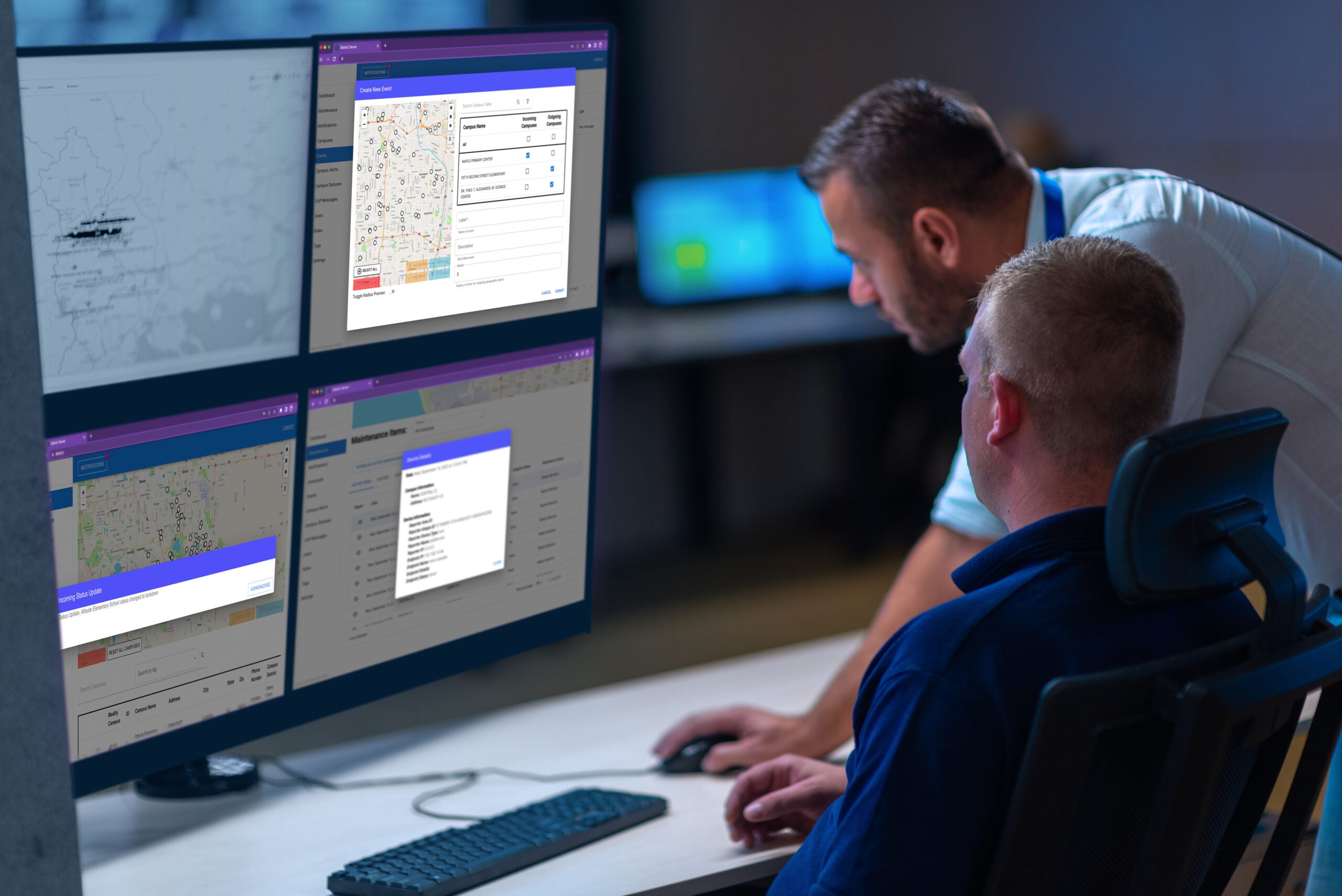
Valcom’s flexibility makes it easy to integrate with existing systems, including door access systems, camera systems, and software-based platforms. When these systems are all connected, an organization has a unified platform that instantly alerts people across multiple channels and methods – Valcom systems help you reach every eye and ear. But what about when there is an emergency in one area of the building that doesn’t affect other parts of the building? It is simple: Valcom’s system allows administrators to issue messages to one area of the building while maintaining operations in another. Scalability is key for many organizations, such as hospitals, airports, and corporate, commercial, and industrial campuses that span multiple buildings.
Everyday Communication Built-In
While Valcom systems excel during emergencies, their primary function is day-to-day communications. Paging staff, shift change alerts, visitor notifications, and routine announcements all flow through the same network. The dual use of a Valcom system means end users are already familiar with the interface, so when an emergency does happen, they already know the system and what to do next.
To learn about how we work in healthcare, K-12 and the commercial & industrial markets click the images below.
Healthcare
Commercial & Industrial

K-12

Want to learn more how Valcom can assist your organization with Life Safety Solutions. Complete the form below to let us know what your challenges are.